 ManorTry Manor free

About Manor
Why we built Manor
Listen to this page · read aloud
Let’s start with who matters most: your kids.
Ask yourself what you want for them. Most of us would say the same thing. We want them to be happy, and we want them to be successful.
So picture them ten or twenty years from now. Who do you think will be the happiest, and the most successful? The ones who excelled at math? Or the ones who grew up honest, grateful, and generous?
And who will be the most skilled? Not the ones who only learned science and math, but the ones who built that learning on a foundation of perseverance and curiosity.
Training the heart
We’ve all dealt with people who were dishonest, or who lacked curiosity or courage. In fact, many of them were educated. Some were scholars. Some were successful, even rich.
Likewise, we hope you’ve had the honor of meeting someone who had none of that worldly success, no fame, no riches, but who had a golden heart. Someone kind, generous, bold as a tiger. Or maybe someone who just had a wonderful gift for generosity.
We’re not saying you have to choose between the two. But we are saying there’s a clear preference most of us would have.
We all want our kids to be successful. But we also want them to be happy, and good. We think virtue is the best path to both, and worth having for its own sake, not merely as a means to success. No one can guarantee how a life turns out. But it’s hard to imagine someone truly happy who isn’t generous.
So this isn’t about behavior modification. And it isn’t about making life more convenient for you, either. Honesty isn’t just about making it easier for you to find out the truth. It’s about your child truly valuing the truth. It’s about training the heart.
Why an app?
Now, you probably didn’t need convincing that virtue is good for your child. The better question is: why would you need another app for that?
We’ve never been much for salesmanship, so here’s something we’re sure of. You don’t.
For centuries, long before modern technology, fathers and mothers have raised virtuous children. Some of us would argue they did it better than we do now. So it’s worth looking at how they did it. They told stories. They talked with their kids. And they noticed virtue, and rewarded it.
You don’t need this app to do any of that. But we think it’ll help. In the coming week, you’ll probably pick up your phone many times a day. With something as important as your child’s character, your phone might be a good place, alongside the books on your shelf and the art on your walls, to keep reminders of it close.
That’s why we built Manor: stories, lessons, and activities you can do together.
How to use it
Manor isn’t a step-by-step manual for raising your kids. Think of it as one small thing that nudges your family to remember, value, practice, learn, and celebrate these virtues.
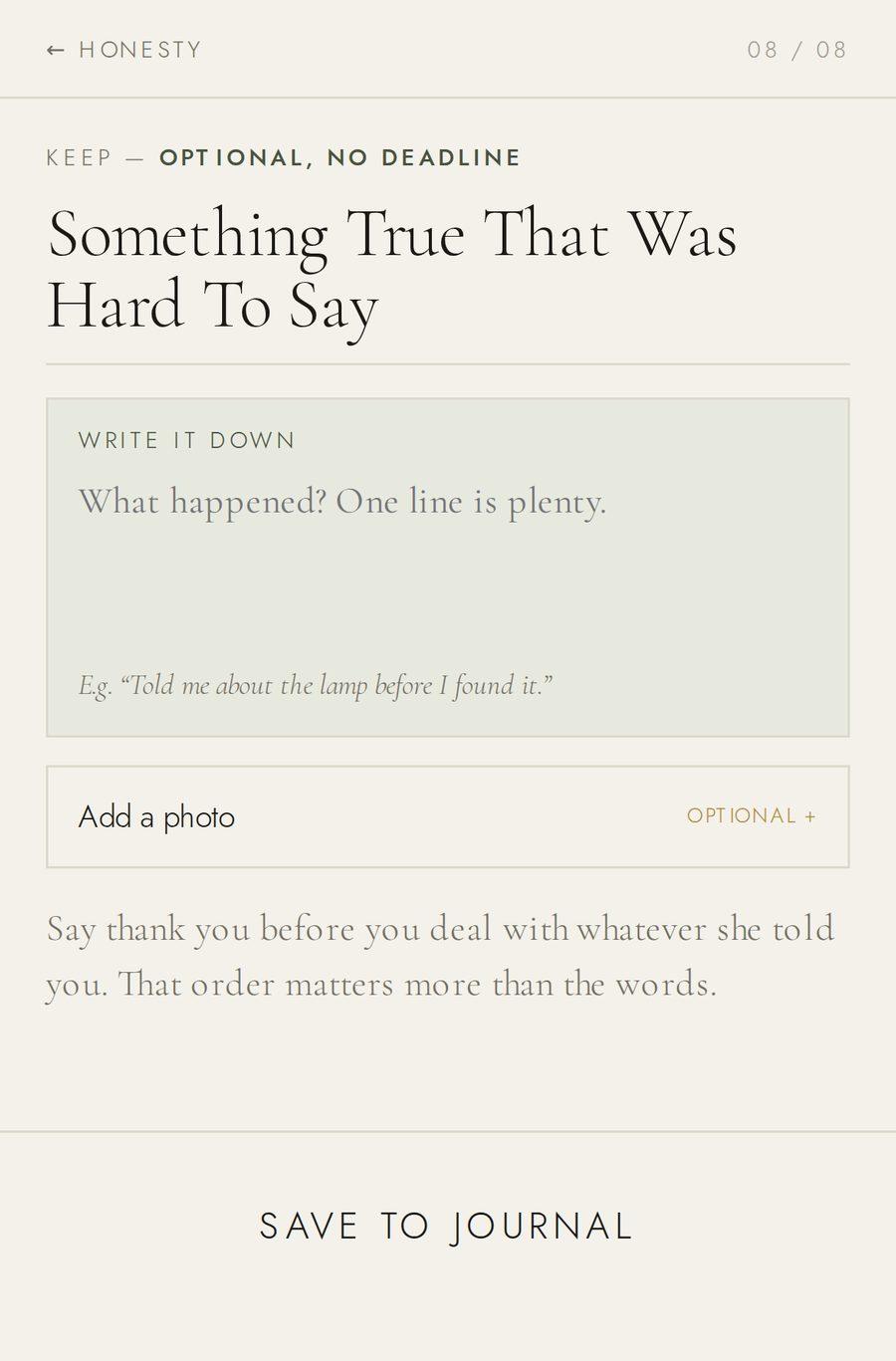
Each virtue starts with a few minutes just for you, because more of this is caught than taught. Then come short lessons you do side by side, and stories and games that make each idea something your kid can feel, not just hear. Read them, or press play and listen. Nothing is timed or scored, and you can come back to any of it.
That small nudge may be all you need to set your kids on a new trajectory, and to help your family become who you otherwise might not have been.
To get to the point: we hope Manor helps you build a home that teaches, practices, and celebrates virtue, and helps your children become the kind of people you want them to be.
Who this is for
Parents of kids 5–12 who want more for their kids’ education than a standard curriculum offers.

What’s missing
A curriculum that helps you teach and practice virtues — not just talk about them.
The shift
From a few sporadic conversations about character — to watching those traits take root.
The structure
Four virtues.
Twelve traits.
Philosophers have sorted character this way since Aristotle. The structure is older than we are — the wording is ours, written to be said out loud to a six-year-old.
Prudence
Wise choices
- Curiosity
- Foresight
Justice
Fairness
- Honesty
- Gratitude
- Responsibility
- Loyalty
Fortitude
Courage
- Boldness
- Patience
- Perseverance
Temperance
Self-mastery
- Self-control
- Humility
- Generosity






Lesson one · Honesty
“Honesty is saying what really happened — even when it costs you something.”
The parent is given the words. Not “discuss honesty with your child” — the actual sentence, said out loud, then said back.
What it’s built on
Every item earns its place.
3×
more likely to admit their own wrongdoing after a story where honesty is rewarded — not punished.
Lee, Talwar, et al. (2014). Psychological Science, 25(8).
372
kids told the truth less, not more, under threat of punishment — and more when the adult simply appealed to honesty itself.
Talwar, Arruda & Yachison (2015). J. Exp. Child Psychology, 130.
What’s left afterwards
One page, in their own handwriting.
Celebrate character the way you celebrate a report card. Not scored. Nobody else reads it. The reason to keep it isn’t assessment — it’s that in four years you can prove this happened.
Start with Honesty.
Six short sittings. The first takes seven minutes, and it’s just for you.